
Prince William County Arrest Warrants Explained
Virginia draws a firm line before any arrest warrant can issue. Under Virginia Code § 19.2-72, a magistrate must first examine the complainant under oath and find probable cause. A written complaint is required in certain situations, such as a felony complaint or one filed by a person who is not law enforcement. Magistrates issue most arrest warrants at the start, though authorized judges and other officers can also act as the law allows. Once issued, the warrant tells an officer to take the named or reasonably described person into custody and bring that person before the proper court. Prince William County publishes no complete public warrant roster, so the issuing court and the assigned agency remain the only reliable confirmation.
Prince William County Warrant Issuance
Every warrant has to do four things: identify or reasonably describe the person, state the offense, direct an arrest and production before the proper court, and carry the issuing officer's signature. Those fields describe the paperwork, not its status. They cannot show whether the warrant has been served, recalled, or returned. Va. Code § 19.2-72 sets the issuance rule itself. The public case system may display a related charge or docket event, but it is not a live warrant-status database.
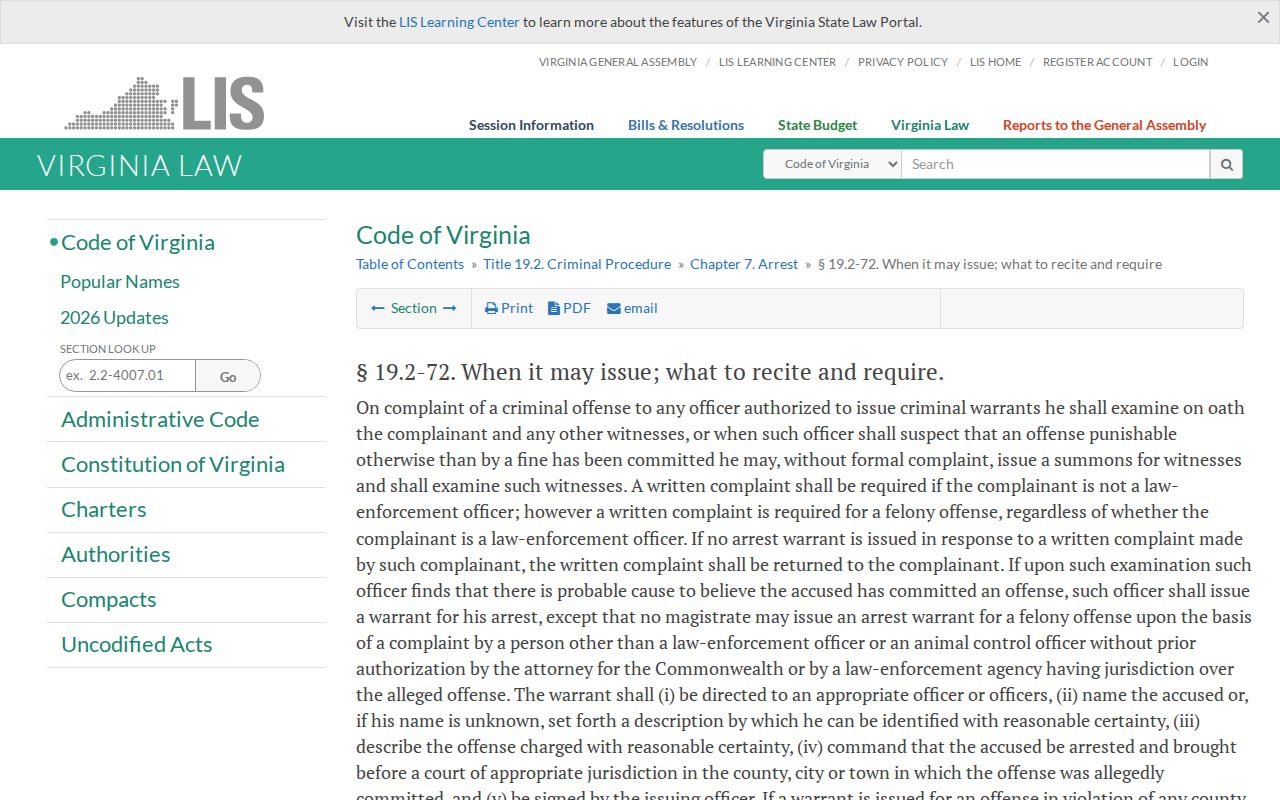
Read the statute alongside the Prince William County court record, then ask the issuing clerk what process remains active.
Inside a Prince William County Arrest Warrant
A public record may show only part of the process. An affidavit or supporting material can be restricted. The case system may not expose current service status, and Prince William County publishes no local warrant-number format or status-code guide.
| Identifier | Case number or process reference; no local warrant-number format was found. |
|---|---|
| Person | Name or description sufficient to identify the accused. |
| Offense | Charge or alleged offense stated in the process. |
| Issuer and return | Authorized officer and court where the person must be brought. |
| Bond or release | Terms are case-specific; no public county schedule was found. |
| Service return | Execution date and return may be recorded after service. |
Ask the clerk to explain an entry before treating it as current status.
Prince William County Warrant Service Roles
Issuance, court records, service, and custody are four separate jobs. Magistrates and authorized court officers issue process in Prince William County; the clerk keeps the file; the Sheriff and police serve the warrants assigned to them. The Adult Detention Center answers questions about charges, bond, court status, and next dates only for a person currently held there.
Adult Detention Center
Current custody and bond details while held
703-792-6420
The Adult Detention Center information page describes intake and inmate services.
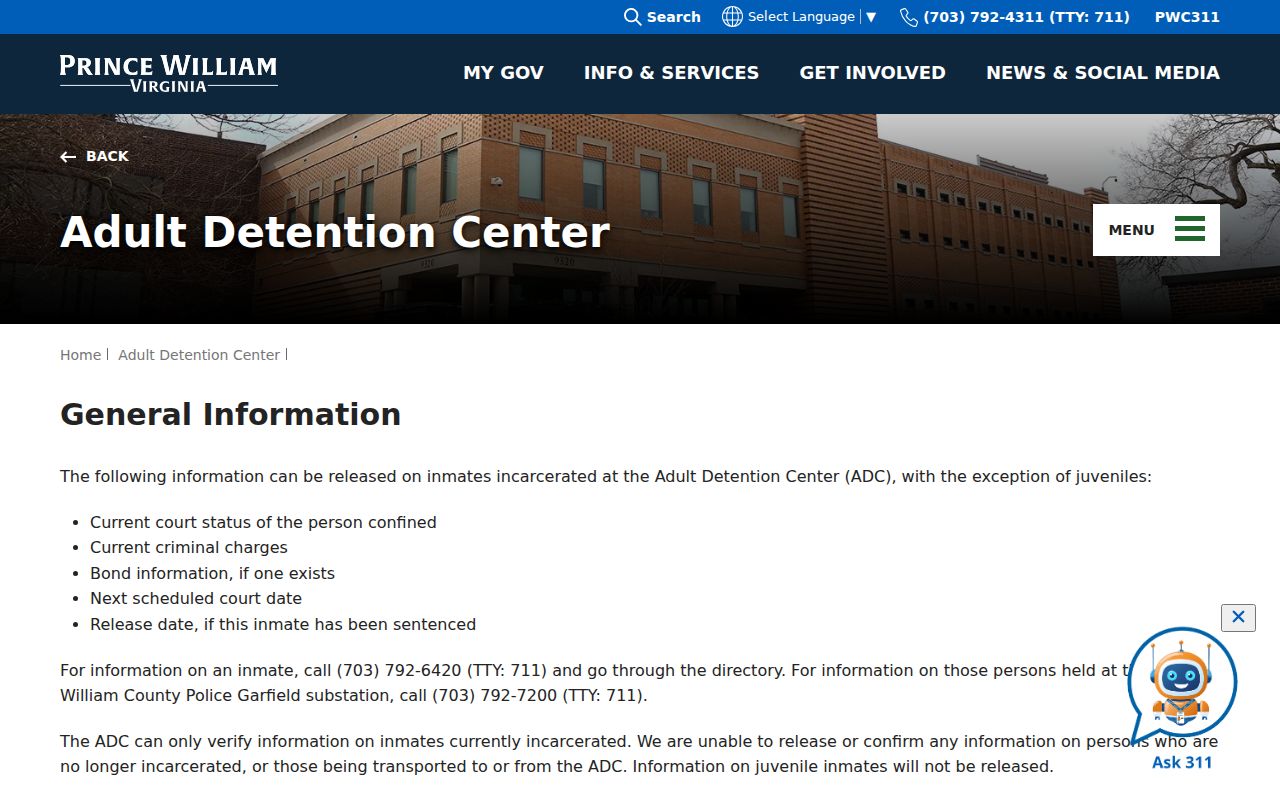
Use this route for someone currently held, not as a Prince William County warrant roster. The ADC inmate funds page lists county-approved deposits and lobby kiosk information.
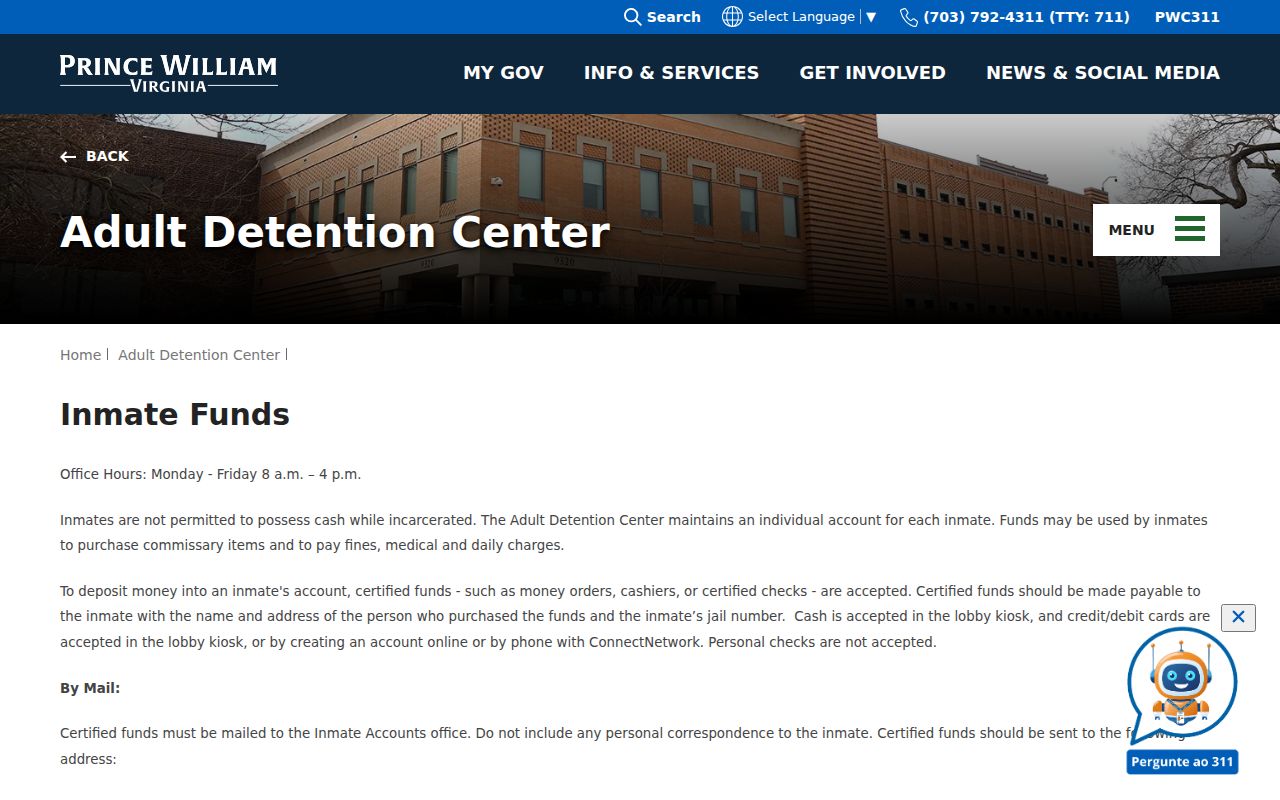
The kiosk supports inmate funds, not warrant payment or status checks.
Serving Arrest Warrants in Prince William County
Virginia law lets an authorized officer execute a warrant or capias within the officer's jurisdiction, and it requires an execution date and a return. Within Prince William County government, Sheriff Operations handles pretrial warrant service, fugitive investigation, probation-violation process, and extradition. County and town police may also originate or serve process under their own authority. The Sheriff FAQ draws a line between court or deputy warrants and matters that started with police. Sheriff Operations describes the assigned warrant service and fugitive work in detail, and the Adult Detention Center page identifies the facility and its intake information. Ask the assigned agency about service before you visit a counter.
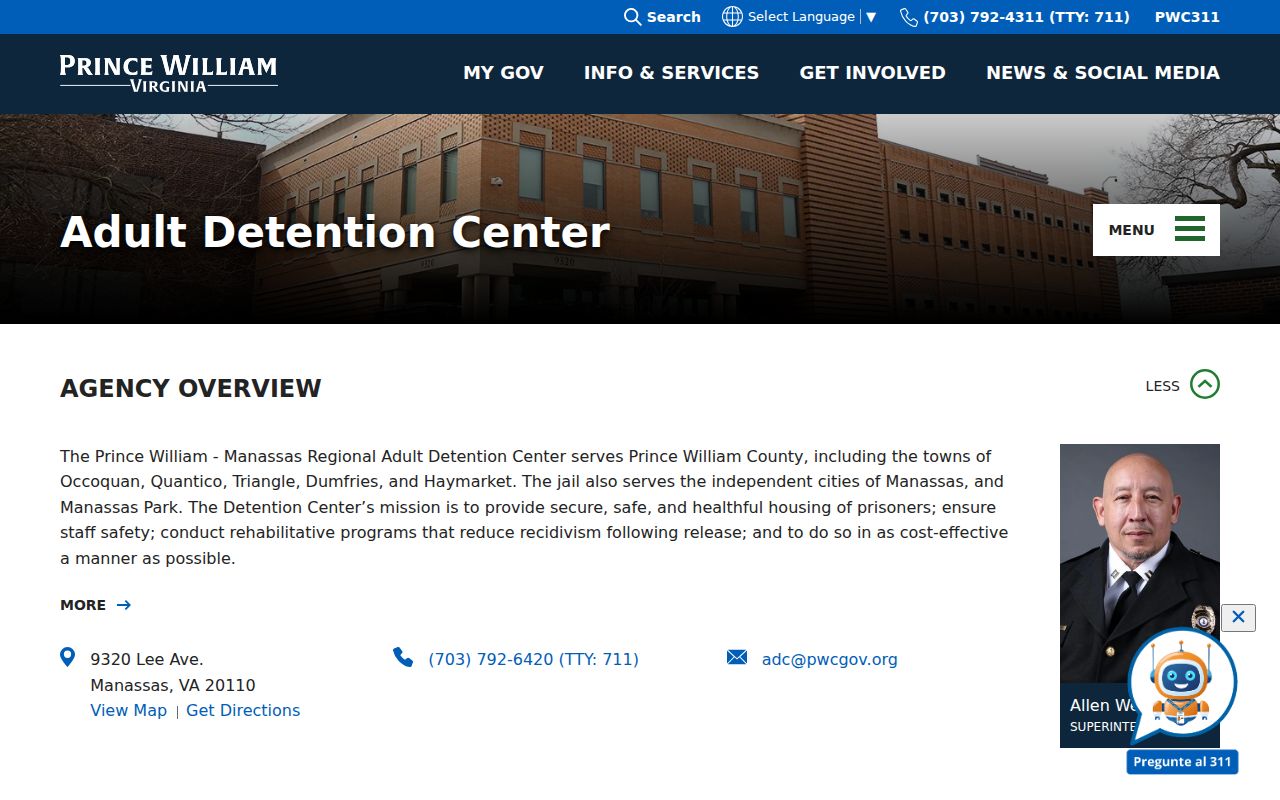
The center handles intake and first-appearance routing after an arrest.
Prince William County Warrant Return Steps
Once a warrant is executed, the officer endorses the date and returns the warrant or capias to a judicial officer. A return updates the case without closing it. A first appearance, bond decision, court date, or release conditions may still follow. The ADC describes intake leading to a magistrate first appearance, and the county after-arrest process covers both steps. Pretrial officers can make recommendations, but the court alone decides bail and release conditions. Prince William County posts no public bond schedule, and no office promises a set release time.
Prince William County Arrest vs Bench Warrants
Three kinds of process do different work in Prince William County. A summons asks a person to answer in court. An arrest warrant directs custody after probable cause. A bench warrant, often tied to failure to appear, responds to a missed appearance or court order. One case can move from a summons to later bench process, so check the current docket and ask the issuing clerk.
| Process | Why It Appears | What to Ask |
|---|---|---|
| Summons | Notice to appear or answer a charge | Which court and date control? |
| Arrest warrant | Sworn complaint and probable cause | Who issued it and what bond instruction applies? |
| Bench or FTA warrant | Missed appearance or court order | Can the court reset or recall it? |
Keep the process type separate from its underlying charge when calling the clerk.
Before an Arrest Warrant, Call the Court
Suppose a case search shows an old charge but no clear process entry. Ask the clerk for the latest docket event and the issuing agency. If the Sheriff is the likely holder, call 703-792-6259. For a police-originated matter, the Sheriff FAQ lists Prince William County Police at 703-792-6517, Manassas Police at 703-257-8000, and Manassas Park Police at 703-361-1136. Ask directly whether the order has been recalled or returned. Be aware that a no-result screen can reflect a sealed record, newly issued process, or a court feed outside the public search. Only the office that owns the case or serves the process can confirm current warrant status.
If There's an Arrest Warrant for You
Call the issuing court or agency before you appear anywhere. Ask whether counsel can arrange a court date, whether bond is set, where a voluntary appearance should happen, and what occurs if the warrant is executed. No Prince William County source promises that walking into the Sheriff's Office or the ADC avoids custody.
Urgent: If you believe an arrest warrant is active, speak with a Virginia defense attorney and confirm the process with the issuing court before planning to appear.
Keep the signed order or receipt after any court action. Ask when the Sheriff or originating police record should update. For a fuller route, the Prince William County warrant overview covers court contact, recall, bond, and next dates.
Search Warrants Are a Different Record
A search warrant is not an arrest warrant. It lets officers search a described place, person, or property for evidence of a crime. You will not find Prince William County search warrants on any public self-check list. Under Va. Code § 19.2-54, the materials become open to inspection once the warrant is executed, or after 15 days. A court can still seal them for good cause. If you need a particular document, ask the Circuit Clerk whether that file stays sealed. Juvenile records, active investigations, and public-safety details may be restricted too.